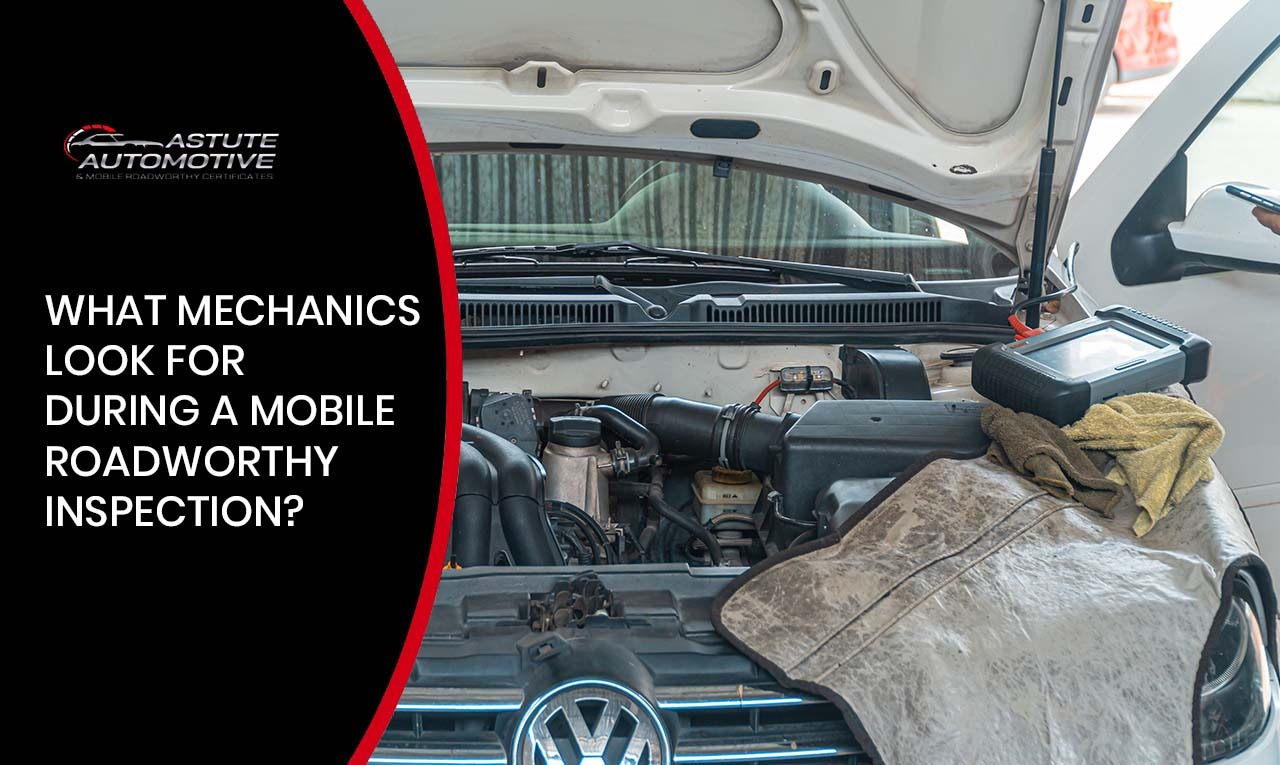
Selling a car, transferring registration, or clearing a defect notice requires a valid roadworthy certificate (also known as a safety certificate). Booking a mobile roadworthy inspection saves significant time by bringing an accredited examiner directly to your driveway or workplace. A mobile roadworthy inspection Brisbane is not a general mechanical service or a cosmetic assessment. Its sole purpose is to verify that a vehicle meets strict statutory safety standards to operate safely on public roads without endangering occupants or other drivers.
The 10 Critical Safety Inspection Points
Mobile roadworthy Brisbane specialists evaluate every vehicle against a standardised checklist that focuses on core mechanical, structural, and operational systems.
1. Braking System Performance
Brake system check is the primary safety component verification on any vehicle.
- Pad and Rotor Wear: Brake pad lining must meet legal minimum thickness limits (typically 1.5 mm to 3 mm depending on state regulations), and brake discs must not have deep grooves, cracks, or excessive thinning.
- Hydraulic Lines: Brake lines and flexible hoses are checked for dry rot, swelling, chafing, or fluid leaks.
- Handbrake/Emergency Brake: The cable tension and mechanism must firmly hold the vehicle stationary on an incline.
- Brake Balance: The brakes inspection expert conducts a pedal-feel check and a low-speed deceleration test to verify the vehicle stops in a straight line without pulling.
2. Tyres and Wheel Assemblies
Tyre condition check must provide adequate traction and structural stability under load:
- Tread Depth: All tyres must have a minimum tyre tread depth of 1.5 mm across the entire principal tread band.
- Physical Damage: Sidewalls must be free from bulges, gouges, cord exposure, and dry-rotting cracks.
- Even Wear: Uneven shoulder wear signals misalignment or suspension wear, which can fail an inspection.
- Wheel Rims: Wheel alignment and rims are checked for structural cracks, bends, and missing lug nuts.
3. Steering and Alignment
The steering inspection verifies whether the assembly must operate smoothly without sticking or excessive free play:
- Play in the Wheel: Excessive slack before the front wheels respond indicates worn tie-rod ends or intermediate shaft wear.
- Power Steering: The pump and rack are checked for leaks, correct fluid levels, and belt tension.
- Ball Joints and Kingpins: Checked for excess movement under physical load.
4. Suspension Components and Dampers
The suspension inspection checks whether tyre contacts with the road and absorbs impacts properly:
- Shock Absorbers: Visible hydraulic oil running down the shock body indicates seal failure and requires replacement.
- Springs: Coil and leaf springs must be intact with no cracks, sagging, or unauthorized cut modifications.
- Bushings and Mounts: Rubber control arm bushings and sway bar links must not be perished, torn, or completely missing.
5. Windscreen and Window Glass
Visibility directly impacts driver safety and comprise the windscreen inspection:
- Driver’s Vision Zone: Any bullseye chip, star fracture, or crack extending into the critical vision sweep of the windscreen fails inspection.
- Delamination and Scratches: Heavy wiper scratching or cloudy delamination that impedes vision must be rectified.
- Window Tint: Aftermarket tint must comply with statutory visible light transmission (VLT) percentages (usually 35% on front side windows).
6. Wipers, Washers, and Demisters
Drivers must be able to clear road grime and rain immediately:
- Wiper Blades: The rubber must not be split, torn, or skipping across the glass.
- Washer Nozzles: The washer bottle must contain water, and nozzles must spray directly across the glass sweep area.
- Demister Fan: The dashboard blower and demister ducting must direct air onto the windscreen to prevent fogging.
7. Complete Lighting Array
Every exterior and interior safety light must function reliably make a thorough lights and indicators check:
- Forward Lights: Low beams, high beams, and daytime running lights must illuminate and be correctly aligned.
- Signalling Lights: Front, rear, and side indicators, plus emergency hazard lights.
- Rear Illumination: Brake lights, high-mount centre stop lamp, tail lamps, reversing lights, and number plate lights.
- Lens Condition: Lenses cannot be smashed, faded white, or leaking water.
8. Seatbelts and Restraints
Seat belts inspection is done for operational reliability in a collision:
- Belt Webbing: Checked for fraying, cuts, stitching separation, or chemical damage.
- Buckles and Retractors: Every belt must pull smoothly, click cleanly into its receptacle, lock under sudden deceleration, and retract fully on its own.
9. Structural Body and Chassis Integrity
Corrosion and collision damage can compromise a car's crash structure making it as important as safety equipment inspection:
- Structural Rust: Flaking or perforated rust on sills, subframes, pillar posts, and floor pans is an automatic failure. Surface rust is noted but generally permitted.
- Crash Damage: Misaligned body panels, compromised chassis rails, or poorly welded repair patches will fail.
- Latches: Bonnet catches (primary and secondary safety catches) and all passenger door handles must latch and unlatch securely.
10. Engine Bay Hazards and Fluid Leaks
Active fluid leaks pose fire risks and road hazards:
- Fluid Leaks: Aggressive engine oil, power steering, transmission, or coolant leaks that hit hot exhaust parts or drip onto roads are prohibited.
- Battery Clamps: The battery must be physically bolted down with a secure bracket, and the positive terminal must be insulated.
- Exhaust System: Checked for rust holes, missing hangers, blown gaskets, and excessive exhaust smoke.
Understanding Safety Standards & Requirements
Booking a roadworthy inspection is mandatory in Queensland when selling, transferring, or re-registering a vehicle. Knowing when do you need a roadworthy certificate QLD ensures you stay fully compliant with local transport regulations.
A valid roadworthy certificate confirms your car meets statutory safety standards. Whether you book a workshop test or an on-site car safety inspection, understanding what is checked in a roadworthy inspection helps prevent costly delays.
Examiners follow a strict roadworthy inspection checklist to verify:
- Brakes & Tyres: Pad thickness, stopping power, and minimum 1.5 mm tread depth.
- Steering & Suspension: Steering play, shock leaks, and worn bushings.
- Lights & Visibility: Operational bulbs, wiper blades, and chip-free windscreen glass.
- Structure & Under-Bonnet: Absence of frame rust and major fluid leaks.
Reviewing these roadworthy inspection requirements beforehand prevents common defects. If your car has issues, review what happens if you fail a roadworthy to understand the standard re-inspection window for repairs.
Mobile Roadworthy Services vs. Pre-Purchase Checks
Finding a roadworthy inspection near me is simple with on-demand examiners. Opting for a mobile roadworthy certificate delivers a professional car roadworthy inspection directly to your home or office. Motorists can quickly arrange a mobile roadworthy certificate Brisbane, or a local car roadworthy Brisbane service on their schedule.
If you're wondering how long does a roadworthy test take? A standard mobile roadworthy check typically takes just 30 to 50 minutes.
If pre purchase inspection vs. roadworthy certificates is your concern then you must understand that a statutory vehicle safety inspection differs significantly from a pre-purchase assessment:
- Roadworthy Inspection: A mandatory vehicle roadworthy inspection assessing only basic statutory road safety (brakes, tyres, lights, and rust).
- Pre-Purchase Inspection: An optional, comprehensive mechanical assessment covering engine health, gearbox condition, and overall market value.
Frequently Asked Questions
-
What do mechanics check during a roadworthy inspection?
Mechanics inspect critical vehicle defects and safety components, including the brakes, steering, suspension, tyres, windscreen, lights, seatbelts, body structure for rust, and engine bay for hazardous leaks.
-
What is checked in a mobile roadworthy inspection?
A mobile roadworthy inspection checklist includes the same statutory safety criteria as a fixed-workshop inspection, covering running gear, visibility, chassis integrity, and cabin safety restraints at your location.
-
What can fail a roadworthy inspection?
Common failure items include bald tyres (under 1.5 mm tread), cracked windscreens, blown light bulbs, torn wiper blades, damaged suspension components, frayed seatbelts, active fluid leaks, and vehicle body condition.
-
What does a roadworthy inspection include?
It includes an all-round visual and mechanical examination of the vehicle’s primary safety systems, vehicle identification check, an operational check of safety equipment, and a brake deceleration/stopping test.
-
How does a mobile RWC inspection work?
An accredited inspector drives to your home or office, inspects the vehicle parked on a flat, solid surface, performs safety checks, including registration inspection and issues a detailed report, and generates a digital or physical safety certificate upon passing.
-
What do mechanics look for in a roadworthy check?
Mechanics try to maintain conventional roadworthy inspection standards and look for wear, damage, or degradation in components that affect vehicle control, stopping ability, structural integrity, and driver visibility.
-
What makes a car unroadworthy?
A vehicle becomes unroadworthy when due to major roadworthy defects and if vital safety component is worn beyond legal tolerances, broken, modified without certification, or leaking fluids in a manner that presents an immediate hazard.
-
How do I prepare my car for a roadworthy inspection?
Park the car on level, hard ground with enough clearance for the mechanic to work. Remove loose clutter, clean excessively dirty undercarriages, ensure the washer bottle is full, and check that all light bulbs work.
-
What should I check before a roadworthy inspection?
Do a walkaround to check all exterior bulbs, measure tyre tread depth, inspect wiper blades for splits, test the seatbelts, top up washer fluid, and ensure the battery clamp is tight and whether the vehicle meets basic road safety requirements.
-
How long does a mobile roadworthy examination take?
A standard mobile roadworthy inspection typically takes 30 to 50 minutes, provided the vehicle is easily accessible and parked on a level surface.
OUR POST
- How Much Does A Roadworthy Cost QLD? Mobile Roadworthy Services Are Described!
- What Is A Roadworthy Certificate & All You Need To Know About It!
- What Is Checked In A Roadworthy Certificate QLD?
- When Do You Need A Roadworthy Certificate QLD?
- Selling A Car Without Roadworthy: What You Need To Know
- Gas Certificate Qld: How Long Does A Gas Certificate Last?
- What Happens If You Fail A Roadworthy? Let’s Know From The Experts
- How To Buy A Used Car – Top Tips And Tricks
- Mastering the Art of Car Washing: A Comprehensive Car Washing Guide for Beginners
- Mobile Roadworthy Inspection Checklist: Ensuring Vehicle Safety
- The Power of Mobile Safety Certificates: Ensuring Vehicle Safety
- What if my car does not pass a roadworthy inspection?
- Stop! You're Cleaning Your Car Headlights Wrong!
- How Long Does A Roadworthy Last – All You Need To Know
- How Long Do Car Tyres Last?
- How to choose the perfect mobile roadworthy service provider?
- The Importance of Mobile Roadworthy Services: Why You Need Them for Your Vehicle
- Understanding the Mobile Roadworthy Certificate Process: A Comprehensive Guide
- How To Winterize Your Car: A Comprehensive Guide to Cold-Weather Vehicle Maintenance
- Key Benefits of Mobile Roadworthy vs Traditional Roadworthy
- The Importance of Mobile Roadworthy Inspections
- Mobile Roadworthy Services: Navigating Brisbane's Roads with Confidence and Convenience
- The Critical Role of Vehicle Inspection Standards: Ensuring Safety and Smooth Rides
- How Long Does A Roadworthy Test Take?
- Free Rego Check: Peace of Mind Across Australia
- Mobile Roadworthy Questions & Answers
- 10 Everyday Roadworthy Inspection Failures In Queensland
- What Are The Uses of a Mobile Roadworthy Certificate?
- Pre Purchase Inspection Vs. Roadworthy Certificates
- What to Expect During a Mobile Roadworthy Inspection?
- Why Mobile Roadworthy Services Are a Time-Saving Solution
- How To Prepare For A Roadworthy Inspection?
- A Comprehensive Guide to Prepare Your Vehicle for Mobile Roadworthy Inspection
- Mobile Roadworthy Inspection Trends and A Look at the Future of Vehicle Safety
- Everything You Need to Know About Mobile Roadworthy Inspection Timeframes
- When to Book a Mobile Roadworthy Inspection in Brisbane?
- Step-by-Step Process to Secure Your Car Roadworthy Certificate in Brisbane
- How the Future of Mobile Roadworthy Services is Shaping the Tomorrow of Vehicle Inspections?
- How Often Should You Schedule a Mobile Roadworthy Inspection in Brisbane?
- Learn the Basics of a Mobile Roadworthy Inspection
- Top 5 Reasons to Choose a Mobile Roadworthy Certificate Service Over a Workshop
- Do You Need a Roadworthy Certificate to Sell a Car in Brisbane?
- What Happens After Roadworthy Certificate Expiry in Brisbane?
- Why Car Roadworthy Services in Brisbane Are Essential for Vehicle Owners?
- Why Choose a Mobile Roadworthy Over a Workshop?
- How to Get a Roadworthy Certificate Fast in Brisbane?
- How Same-Day Mobile Roadworthy Certificates Work?
- What Documents Do You Need for a Mobile Roadworthy Certificate?
- Pre Purchase Inspection Vs DIY Car Checks
- Can Older Cars Pass a Roadworthy Inspection?
- How Mobile Roadworthy Services Make Selling Your Car Easier?
- 10 Critical Safety Items Mechanics Look for During a Mobile Roadworthy Inspection






Copyright © 2021 Mobile Roadworthy Certificate Brisbane | Astute Automotive. All Rights Reserved. Powered by: iSquad.